Every few years, usually at budget time, an HOA board asks the same question: should we keep paying a security company, or hire our own guards? In the Southeast the question carries extra weight. Gated communities are common, hurricane season strains staffing, seasonal residents swing gate traffic, and Florida, Georgia and the Carolinas each regulate security officers differently.
There is no universal answer. But the trade-offs are predictable, and they fall into three areas: what security really costs, who oversees the work, and where liability lands when something goes wrong.
Two models, one real difference
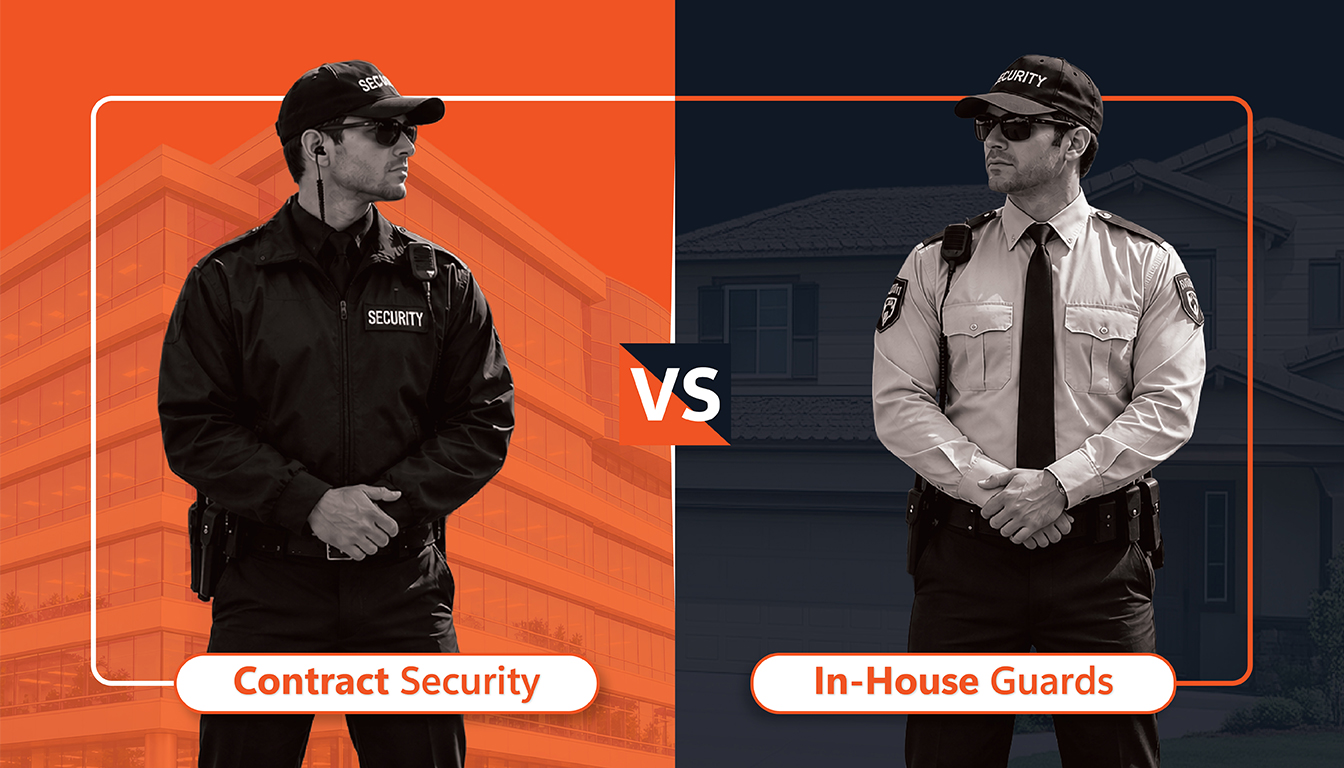
Under a contract model, the association hires a licensed security agency. The agency recruits, employs, trains, schedules and insures the officers. The board manages a vendor.
Under an in-house model, often called proprietary security, the officers are association employees. The board, usually through its community manager, becomes the employer, with everything that implies.
Many communities land on a hybrid: an in-house security director or gatehouse team, with contracted officers for patrols, overnight shifts or peak season.
| Contract security | In-house guards | |
| Employer of record | Security agency | The association |
| Cost shape | One hourly bill rate | Wages plus employer costs |
| Daily supervision | Agency supervisors | Manager or security director |
| Covering call-outs | Agency | Association |
| Choice of officers | Limited; can request changes | Direct |
| Liability for officer conduct | Mostly the agency | The association |
Cost: compare the full number, not the hourly rate
The usual mistake is comparing a contractor’s bill rate with an in-house wage. They measure different things.
One post staffed around the clock is 8,760 hours a year. That is about 4.2 full-time positions before vacations, sick days and training, so in practice five or more people.
As an illustration only (these are not market rates), suppose a contractor bills $26 an hour. The annual cost is $227,760. Suppose in-house officers earn $18 an hour. Wages come to $157,680, which looks like a $70,000 saving. Then add what the bill rate already includes:
- Payroll taxes, workers’ compensation and benefits, often 25 to 35 percent of wages
- Overtime and holiday pay for uncovered shifts
- Recruiting, background checks, licensing fees and training
- Uniforms, radios and equipment
- Supervision and scheduling time
- Higher liability premiums
At a 30 percent burden alone, the in-house figure reaches roughly $205,000. The remaining gap can vanish after one year of heavy turnover.
In-house tends to win on cost when a community has enough posts to justify a dedicated supervisor, and when it keeps its people. Paying officers more than a contractor would, and retaining them for years, is often the real financial case. Contract tends to win for smaller communities with one or two posts, where a single resignation creates a coverage crisis.
Oversight: who is watching the post at 3 a.m.?
Residents judge security by what they see at the gate. Boards should judge it by what they can verify.
With a contractor, supervision is part of what you buy, but quality varies. The agency’s field supervisor may cover a dozen sites. Officers answer to the agency, not the board, and directing them too closely can blur the line between client and employer. When the contract is rebid, the records often leave with the outgoing company.
With in-house officers, the board has direct control over hiring, post orders and standards. It also has direct responsibility. Someone must write procedures, confirm patrols happen, review incident reports and handle discipline. Volunteer boards rarely have the time, so the job falls to a manager who may have no security background.
Under either model, the same questions apply:
- Can we confirm which checkpoints were patrolled, and when?
- Do incident reports reach the board promptly and in a consistent format?
- Who owns the gate logs, reports and patrol data?
- How quickly can we produce records if an insurer, attorney or detective asks?
Tools such as GPS-verified tour confirmation make these questions answerable under either model. What matters is that the association, not the vendor, holds the record.
Liability: outsourcing the work is not outsourcing the risk
Contracting does transfer real risk. The agency carries general liability and workers’ compensation coverage, answers for its employees’ conduct, and normally agrees to indemnify the association. If an officer is hurt on duty, the claim is the agency’s.
It does not transfer everything. An association can still be named in a negligent security suit, on the theory that it controlled the property and knew about prior incidents. An indemnity clause is only as good as the insurance behind it. Ask to be named as an additional insured, check the limits, and have counsel read the indemnification language before signing.
In-house puts the association in the employer’s seat. That means workers’ compensation, wage and hour compliance, and exposure for negligent hiring, training, supervision and retention. Use of force by an employee is the association’s problem directly. Arming in-house officers raises that exposure sharply, and insurers price it accordingly.
In both models, documentation decides a great deal. Florida’s 2023 tort reform lets juries assign fault to the criminal actor in negligent security cases, which makes evidence of reasonable, consistent security measures more valuable. A board that can show completed patrols, incident follow-up and decisions made on known risks stands on firmer ground than one relying on memory.
What the Southeast adds
Licensing differs by state and by model. Florida licenses individual officers, yet generally exempts unarmed employees who work exclusively on their employer’s premises. Armed officers need a state firearm license either way. Georgia and the Carolinas each treat in-house security differently. An exemption from licensing is not an exemption from the duty to train, so confirm the rules with the state regulator and your association attorney.
Storms test staffing. After a hurricane, a contractor can bring in officers from other regions. An in-house team lives in the same damaged area as the residents.
Seasons change demand. Snowbird months and holiday weeks can sharply increase gate traffic. Contracts flex more easily than payroll.
Questions to settle before the vote
- How many posts and hours do we need, and does that scale justify a supervisor?
- Who, by name, will manage officers day to day?
- What does our insurer say about each model, in writing?
- If we contract, who owns the data, and what happens at rebid?
- If we go in-house, what is the plan for call-outs, turnover and storm coverage?
Neither model is safer or cheaper by default. Contract security buys flexibility and shifts part of the risk. In-house buys control and consistency, at the price of becoming an employer. The communities that do well with either are the ones that can see what their officers do and prove it later.
If your board is working through this decision and wants to talk about keeping that visibility under either model, you can reach the CSA360 team here.